Norway

Operators & routes from / to Norway


Operators & routes from / to Norway
- Bergen – StavangerFjord Line5 h 30 min
- Hirtshals – BergenFjord Line17 h 30 min
- Hirtshals – KristiansandColor Line, Fjord Line2 h 50 min
- Hirtshals – LarvikColor Line3 h 50 min
- Hirtshals – StavangerFjord Line11 h 15 min
- Kiel – OsloColor Line20 h
- Stromstad – SandefjordColor Line, Fjord Line2 h 30 min
Important information
Travelling by car
- Motorcycles / cars / motorhomes up to 3.5t
- Motorhomes over 3.5t up to 7.5t
- Vehicles with trailers
- within built-up areas
- 50
- 50
- 50
- outside built-up areas
- 80
- 80
- 801
- Schellstraße
- 802
- 80
- 801
- Motorway
- 802
- 80
- 801
Toll charges
Tolls in Norway are collected electronically and billed by Epass24. Use the option to register your vehicle in advance to get through the Norwegian toll system smoothly. For longer stays we recommend the AutoPASS chip for attractive fares.
Toll financing for infrastructure projects
Norway's new tunnels, bridges and road sections are financed through tolls. This toll obligation remains in place until construction costs are covered. Please note that some towns and villages also charge tolls, although motorcycles are exempt.
Toll rules by vehicle type
- Motorcycles: Toll-free
- Trailer combinations over 6 m long: No higher toll
- Motorhomes with a maximum permitted weight under 3.5 t: No higher toll
- Motorhomes with a maximum permitted weight over 3.5 t: Class 2, but can use the cheaper Class 1 fare with an AutoPASS chip.
Toll stations and vehicle classes
Vehicle number plates are recorded at over 300 toll stations. Class 1 vehicles up to 3.5 t, as well as motorhomes over 3.5 t of vehicle class M1 with an AutoPASS contract, pay the cheaper fare. Commercial vehicles and other motorhomes without an AutoPASS contract fall into Class 2.
Remote private roads and online payment
Tolls may also apply on remote private roads. At the barrier there is usually a small shelter or a metal box with forms. The form, labelled with name, vehicle registration number and date, is left there, and the carbon copy is placed clearly visible on the dashboard. If no forms are available, you should issue a receipt yourself. In some cases payment is now made online.
AutoPASS contract for private motorhomes
Private motorhomes over 3.5 t of vehicle class M1 do not need a transponder or chip. However, if a transponder with a contract is used, the same cheaper fares apply as for light vehicles up to 3.5 t. The contract can be concluded with one of the issuing companies or directly with AutoPass, through the Norwegian company Fremtind.
Commercially used and rented motorhomes
Commercially used vehicles over 3.5 t require a toll chip. Rented motorhomes also fall under this rule and require either an existing toll chip or an AutoPASS contract. Conclude this contract with AutoPass through Fremtind to optimise your toll charges.
Further information on tolls in Norway can be found here
Smoking ban in cars
Unlike other countries, Norway has strict anti-smoking regulations. These also state that smoking in a car is strictly prohibited within built-up areas. It does not matter whether a child is sitting in the car or not. The regulations apply always and to everyone.
Unlike in Germany
- Trams have priority
- No parking and no stopping: Marked by no-parking signs reading >All stans forbudt< (sometimes with time limits); parking prohibited where there is a continuous white line at the edge of the carriageway; at least 5 m before a junction, pedestrian crossing or cycle crossing. The distance is measured from the point where the kerb, kerb edge or carriageway edge begins to curve.
- Dipped headlights (or alternative daytime running lights): mandatory on all roads during the day, all year round.
- Hi-vis vest: Drivers of motor vehicles and motorcycles registered in Norway (including rental vehicles) must wear a reflective hi-vis vest when leaving their vehicle after an accident or breakdown outside built-up areas. The vest must be easily reachable from the driver's seat.
- Winter tyre requirement: For all vehicles up to 3.5 t maximum permitted total weight there is no general winter tyre requirement. However, vehicles with summer tyres must be fitted with snow chains in wintry road conditions (snow and ice). If winter tyres are used, the minimum tread depth is 3 mm. For vehicles and their trailers each with a maximum permitted total weight over 3.5 t, winter tyres are mandatory from 15 November to 31 March, with a minimum tread depth of 5 mm. Tyres with the mountain symbol must be fitted to the drive axles and front steering axles; M+S tyres may be used on other axles.
- Snow chains: Vehicles with a maximum permitted total weight over 3.5 t must carry snow chains during the winter season. Heavy vehicles that do not carry chains may be refused entry. This does not apply to motorhomes with a maximum permitted total weight between 3.5 and 7.5 t.
- Studded tyres: allowed in southern Norway from 1 November to the first Sunday after Easter, and in northern Norway (Nordland, Troms, Finnmark) from 15 October to 1 May, when weather conditions require them. All tyres, including those of a trailer, must be studded. Within the city limits of some towns a studded tyre fee must be paid.
- Trailers: White reflectors facing forward must be fitted to both outer mirrors when the trailer is over 2.30 m wide and the width difference between the towing vehicle and the trailer is greater than 50 cm.
- Road traffic regulations: The police may require a drug test in the form of a blood test.
- Accidents: Personal injuries or wildlife collisions must be reported immediately to the nearest police station.
Maximum permitted total weight
Camping
Norway has more than 1000 campsites, often with breathtaking views of fjords, lakes and mountains.
The choice ranges from minimalist, basic tent sites and motorhome pitches to fully equipped campsites with sanitary facilities, electricity and children's playgrounds.
Those who prefer to experience nature entirely on their own will also get their money's worth here: in Norway, the right of public access applies, which means that everyone has the right to enjoy unspoiled nature and
to camp in the open countryside, as long as they respect the environment and do no damage. Whether high up in the stillness of an impressive mountain landscape, on the shore of a deep blue fjord or on the coast, where the sound of the waves lulls you to sleep, there are no limits to your next camping adventure!
Fjords of Norway
Norway is world-famous for its deep blue, peaceful fjord landscapes. We would like to introduce you to some of the most fascinating fjords here.
1. Nærøyfjord
2. Sognefjord
3. Hardangerfjord
4. Lysefjorden
5. Geirangerfjorden
Money can't buy happiness, but a ferry to Norway comes pretty close.
Snow-covered mountains, forests in beautiful autumn colours, a land full of happy people, narrow fjords with steep cliffs, a night sky with northern lights and the fresh, icy cold air of winter. We are talking about the unique Norway: here you will find everything from fairytale forests in summer to icy coastlines in winter, which are just as mysterious as the country's mythology.
In this article, discover the special features of the country and the most beautiful destinations for you alone or with your family.

- Location: Scandinavian Peninsula, Northern Europe
- Area: approx. 323.759 km²
- Population: around 5.48 million
- Capital: Oslo
- Official language: Norwegian, Sami as a minority language in some regions
- Currency: Norwegian krone
- Culture: Rich in folklore and traditions, influenced by the history of the Vikings
- Politics: constitutional monarchy
- Cuisine: known for its seafood and fish dishes, as well as schnapps and waffles
- Activities: swimming, cycling, hiking, horse riding, canoeing, sauna sessions
Sights
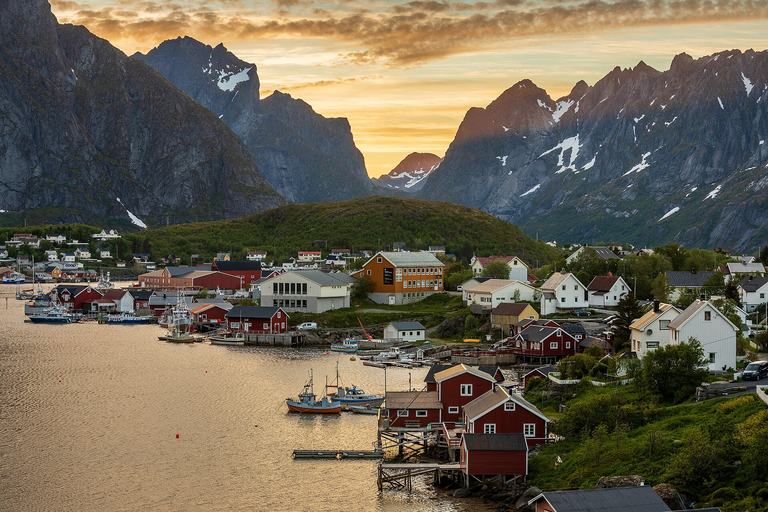
Photo: Ximonic (Simo Räsänen) (CC BY-SA 4.0)
The Lofoten, a majestic island group in the far north of Norway, captivates with its breathtaking beauty. This rugged yet picturesque landscape is surrounded by steep mountains that rise above emerald-green waters. The characteristic fishing villages with their red rorbuer huts provide a colourful contrast to the snow-covered peaks and the gentle bays.
The Lofoten offer a wealth of outdoor activities, from hikes along spectacular coastal paths to first-class fishing. The northern lights, which fill the dark sky during the winter months, give this place a mystical aura.
The Lofoten are not only a visual wonder, but also a retreat that touches the soul with its unspoiled nature and its incomparable tranquillity.
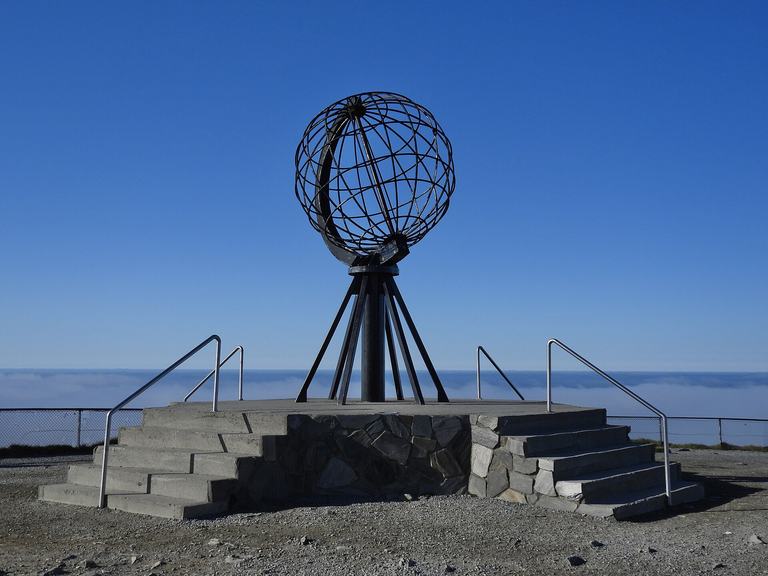
The North Cape, a legendary place on the outermost edge of Europe, embodies the unspoiled wilderness of the far north. Here, on a cliff in Norway, the world seems to end at its outermost limit, while the gaze sweeps over the icy North Atlantic.
The North Cape is not only a geographical milestone, but also a symbol of unwavering nature. Set in the Arctic landscape, this place offers spectacular midnight sun views during the summer and a breathtaking backdrop for the northern lights in winter.
The majestic steel globe standing on the edge of the cliff marks the visitor as someone who has reached the furthest point of the continent. The vastness of the North Cape and the silence carried by the icy winds evoke an indescribable awe of nature and open up a view of a world beyond all boundaries.
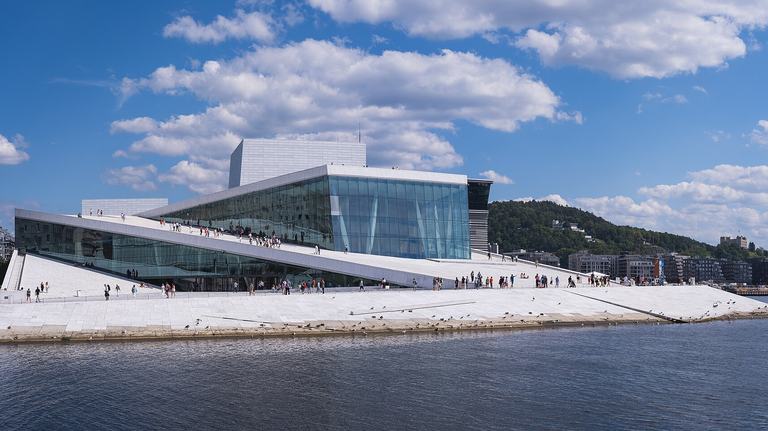
Photo: Christian David (CC BY-SA 4.0)
Oslo, the vibrant capital of Norway, fascinatingly combines history, culture and a modern, lively atmosphere. Situated on the shore of the Oslofjord, the city impresses with a charming mix of architectural masterpieces, from old fortresses to contemporary structures.
The Royal Palace and the magnificent opera house reflect the cultural and historical diversity of the city. Oslo is a melting pot of art and creativity, from renowned museums such as the Munch Museum to dynamic galleries and public street art.
The city's green oases, such as Frogner Park with its famous Vigeland sculptures, invite you to relaxing walks. At the same time, modern Oslo pulses with its lively restaurant and nightlife scene, ranging from first-class restaurants to trendy bars and clubs. This city is not only a cultural hotspot, but also a gateway to the breathtaking Norwegian nature, as it is surrounded by forests, lakes and hiking trails.
Oslo is a fascinating metropolis that unites tradition and innovation in a unique symbiosis.
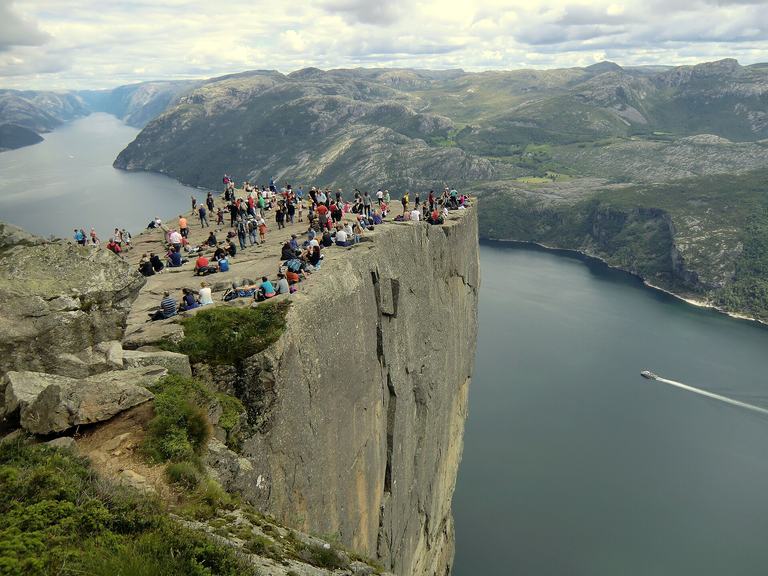
Photo: jace48 (CC BY-SA 3.0)
Preikestolen, also known as the "Pulpit Rock", is a natural rock ledge in Norway that hangs like a pulpit above the Lysefjord. This striking rock formation rises majestically 604 metres above the emerald-green waters and offers visitors a breathtaking view of the rugged fjords and the surrounding landscape.
The hike to Preikestolen begins through picturesque Norwegian scenery and forest paths before leading to the iconic rock. Once you arrive, the view from Preikestolen rewards hikers, adventurers and nature lovers with an unrivalled panorama, which is often described as one of the most spectacular in Norway.
The sheer size of the rock ledge and the clarity of the water beneath it give this place an aura of calm and majesty that attracts visitors from all over the world. Preikestolen is not only a wonder of nature but also a place that fills the heart with awe at the untouched beauty of the Norwegian landscape.
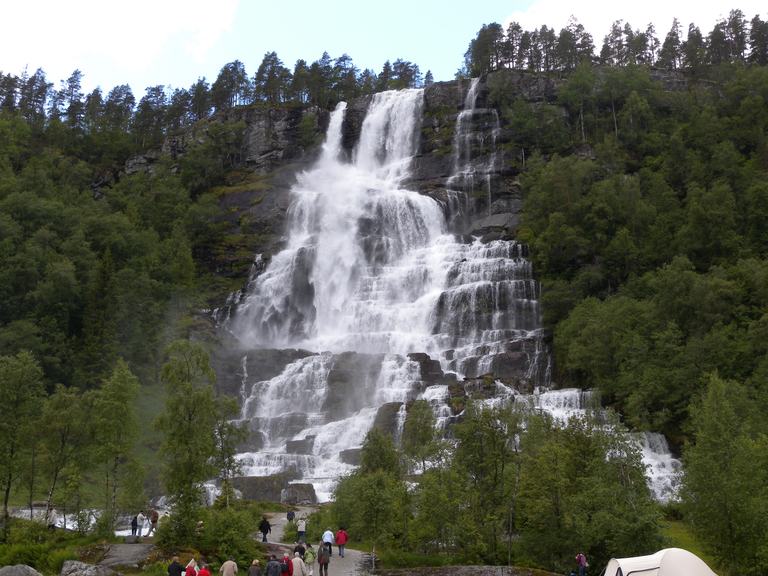
Photo: Alfred Diem (CC BY 2.0)
The Tvindefossen waterfall, an enchanting natural wonder in Norway, fascinates with its majestic splendour. The water plunges in two powerful cascades over an impressive height of about 152 metres, pouring in harmonious motion into the glittering pool at the foot of the falls.
The surrounding landscape is marked by picturesque beauty: lush green forests and steep rock walls frame Tvindefossen, making it a magical place in the heart of Norwegian nature. Visitors can walk up the path and experience the roaring water and the refreshing spray of the waterfall up close. The atmosphere is shaped by the unrivalled power and elegance of the water, which creates a harmonious symphony within this enchanting landscape.
Tvindefossen is not only a feast for the eyes but also a source of calm and inspiration that delights all the senses and brings the soul into harmony with the wonders of nature.
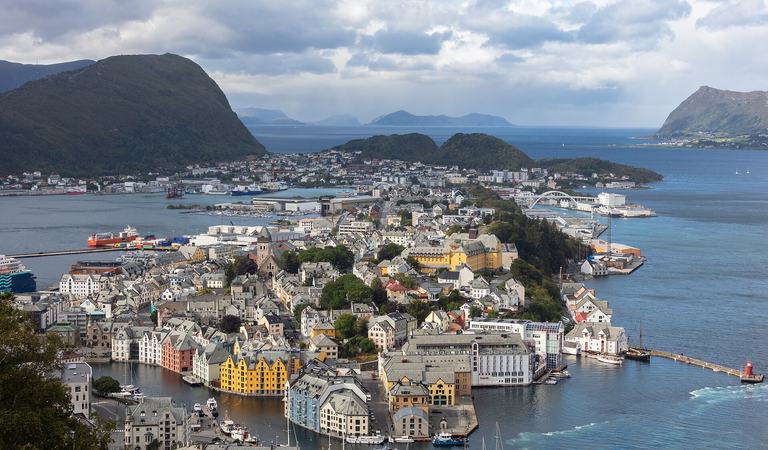
Photo: Diego Delso (CC BY-SA 4.0)
Alesund, a charming port town on the Norwegian west coast, impresses with its unique architecture, which was shaped by a devastating fire in 1904. The town is famous for its richly decorated Art Nouveau buildings, which stretch along the coast and give it an unmistakable look. Alesund sits on several islands, surrounded by majestic fjords and impressive mountain landscapes.
The town delights visitors with its lively cultural scene, from art galleries to traditional Norwegian festivals. The surroundings of Alesund offer a wealth of outdoor activities, such as hikes in the nearby Sunnmøre Alps or boat trips to the spectacular Geirangerfjord and Hjørundfjord.
Alesund is not only a visual feast for architecture lovers but also a gateway to the breathtaking landscapes and adventures of the Norwegian west coast.
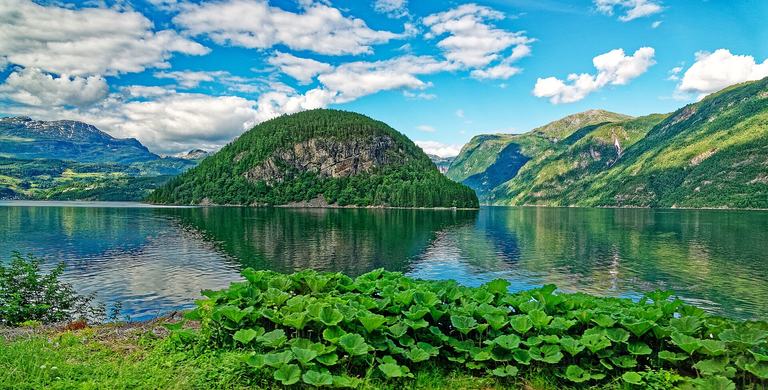
Photo: Holger Uwe Schmitt (CC BY-SA 4.0)
The Hardangerfjord, Norway's second-longest fjord, impresses with its spectacular beauty and is known for its deep blue water, surrounded by majestic mountains and green valleys. The shores of the fjord are marked by picturesque orchards that, in spring, put on a colourful display with countless apple trees in blossom.
This idyllic setting stretches over a length of about 179 kilometres and attracts visitors from all over the world. The Hardangerfjord is a paradise for nature lovers, who can enjoy numerous outdoor activities here, such as hiking, fishing and boat trips, amid this breathtaking landscape.
Visitors can also explore traditional villages, discover local craft workshops and experience Norwegian culture up close. With its unique natural treasures and cultural diversity, the Hardangerfjord is a place of unrivalled beauty that promises an unforgettable travel experience.
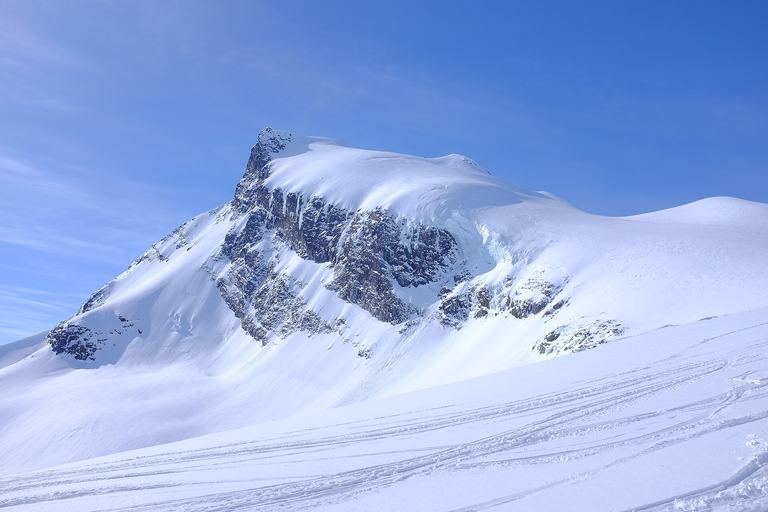
Photo: Frankemann (CC BY-SA 4.0)
Jotunheimen National Park, Norway's largest national park, is a breathtaking wilderness area shaped by high peaks, clear lakes and wide valleys. The name Jotunheimen means "Home of the Giants" and refers to the majestic mountain landscapes that dominate the park.
The park is home to some of Norway's highest peaks, including Galdhøpiggen, at 2,469 metres the highest mountain in the country. Jotunheimen is a paradise for hikers and adventurers, offering a wide range of marked trails, from leisurely walks to demanding trekking tours. The landscape is marked by glaciers, deep valleys and impressive rock formations that reward hikers with a variety of panoramas and natural wonders.
The diversity of flora and fauna, the vastness of the landscape and the unique atmosphere make Jotunheimen National Park an incomparable destination for nature lovers and adventurers who want to experience the untouched beauty of the Norwegian mountain world.


Cultural facts
A majestic identity
Norwegian culture is shaped by breathtaking nature, a rich history, deeply rooted traditions and modern progress. Norway, with its majestic fjords, snow-capped peaks and endless forests, has created a unique identity that reflects both the strength of nature and the spirit of its people.
Between fjords, peaks and traditions
Norwegians have a deep connection with their environment. Respect for nature is anchored in their way of life, which shows in their love of hiking, skiing and other outdoor activities. The Norwegian landscape is not merely a backdrop, but an integral part of everyday life and cultural identity.
The multifaceted world of the Norwegian language
The Norwegian language, Norwegian, is an essential part of national identity. There are two written forms of Norwegian, Bokmål and Nynorsk, which reflect the diversity of regional dialects. Literature also plays an important role, and authors such as Henrik Ibsen and Knut Hamsun have shaped Norwegian literature internationally.
From the Hardanger fiddle to A-ha
Music is another important aspect of Norwegian culture. Folk music, especially the "Hardanger fiddle", is deeply rooted in Norwegian tradition. Modern Norwegian artists such as Edvard Grieg and the world-famous band A-ha have shaped the Norwegian music scene internationally.
Colourful diversity in Norway's traditional costumes
Norway takes pride in its rich folk dance tradition, especially the "Bunad", a festive traditional costume often worn on special occasions. The colourful embroidery and patterns on the Bunad vary by region and represent the cultural diversity of the country.
From the northern lights to the fishing village: Norway's maritime roots
Norwegians also have a strong maritime tradition. The country has a long history of fishing and seafaring, which is reflected in the many port towns and fishing villages along the coast. The "Nordlys" (northern lights) is not only a spectacular natural phenomenon, but also a symbol of Norway's mysticism and fascination.
Social, green and creative in the 21st century
Modern Norwegian society is characterised by its progressiveness. Norway is known for its social justice, its progress in renewable energy and its efforts to protect the environment. The country also has a thriving art and culture scene, with cities such as Oslo being centres of creativity and innovation.
Harmony between people and nature: Norway's unique culture
Overall, Norwegian culture reflects a harmonious connection between people and nature, tradition and modernity. The values of community, closeness to nature and cultural identity shape everyday life and make Norway a unique and fascinating part of the world.
Fun facts
Europe's majestic waterfall in Sunndal
Europe's highest waterfall, the Vinnufoss, is located in the remote region of Sunndal, about 70 km from Oppdal. With an impressive height of 860 metres, it ranks among the highest waterfalls in Europe and is even the fourth highest in the world.
Mattresses for better milk in Norway
A curious law from Norway has guaranteed all cows the right to a mattress since New Year 2006. The more comfortable housing is meant to lead to cows producing about 10% more milk of higher quality, which in turn brings additional income for farmers.
Drunken elks in Norway's snow
At the start of winter in Norway, caution is advised around drunken elks. Under the snow, berries and apples ferment faster, are eaten by the animals and have a similar effect to alcohol, which makes the elks' behaviour unpredictable.
The depths of Nordfjord: Europe's clearest inland lake
Europe's deepest lake, part of the Nordfjord, is not only the deepest but also the clearest inland lake in the Nordic countries. With a depth of about 514 metres and an adjoining glacier range, the lake has a low temperature. Nevertheless, it is used for activities such as rowing, fishing and occasionally even swimming.
Trollstigen: Norway's winding road of the trolls
Anyone crossing the Trollstigen, an impressive pass in Norway, will come across warnings about trolls. Norwegians cherish their sagas and myths about trolls and claim that they can be found at special places throughout the country. The Trollstigen road, with quirky road signs and eleven hairpin bends with a gradient of 12%, offers a breathtaking view of the landscape.
The unique Ice Music Festival
For lovers of quirky music events, Norway offers the Ice Music Festival. Artists build their instruments from ice and use them for a one-of-a-kind concert. From electric guitars to wind instruments, the creative ice instruments are varied.
Between fjords and espresso
Norway also shares an extraordinary love of coffee. Just behind Finland, the country ranks second in coffee consumption per person. With an average of about two cups a day, Norway is a true coffee paradise, while Germany, with 1.4 cups a day, ranks 8th.
Seasonal conditions
Summer
- Days without end
Unlike winter, summer brings long days and short nights. Nearby, thanks to the midnight sun, it often doesn't even get dark. At daytime highs of 25 to 30 degrees, you can enjoy the long days outdoors in nature and get out and about a lot. Even so, always carry rain and windproof clothing with you. Norway has a saying: “There is no bad weather, only bad clothing.”
- Outdoor activities
From May, Norwegians start their active outdoor life. Swimming, cycling, hiking, horse riding, canoeing: there is a wide range of offers. Norway alone has 7000 different hiking routes, allowing you to experience the whole country up close to nature.
- Summer delicacies
Summer means gathering and hunting. In summer, everything revolves around berries and barbecues. In many places, strawberries, cherries and many other fruits are sold. A major summer tradition, by contrast, is barbecuing and the phenomenon of the Utepils (literally “beer outdoors”). At the first sunshine, people flock to the pubs and streets of their towns. A typical summer dish is also freshly caught salmon, mackerel, trout or many other fish. These are often served with sour cream, new potatoes and cucumber salad, or with white bread, lemon, mayonnaise and white wine.
Winter
- Magic of the lights
In winter, the sun rarely comes out, or not at all. In southern Norway you can expect about six to eight hours of daylight. The resulting romantic lighting of the towns in the dark is very spectacular and worth a holiday.
- Northern lights
Norway is well known for the northern lights. From October to March, the chances of seeing this natural phenomenon are highest. The further north your journey goes, the greater your chance of spotting them. The snow also lights up the surroundings in an almost magical way.
- Winter Wonderland
Norwegians love their outdoor activities. When the first snow falls, they are also out on the slopes with their skis. Depending on the region, snow depths of 10 to 160 centimetres can be expected. This snow cover wraps the country in a winter paradise.
- Whale watching
Orcas and humpback whales in particular seek refuge in the fjords in winter. You can explore the sea off Norway by boat. Since spotting whales is always a bit of a matter of luck, the boat trip also becomes a journey of emotions combined with plenty of excitement.
- Culinary delights in winter
In winter, the fishing season in Norway begins. Many restaurants offer seasonal dishes with plenty of fish, seafood and also game. The reason for eating fish is the start of the Skrei season in January. The fish come to spawn in the “warmer” waters near the Lofoten, where the fishermen have already cast their nets and are waiting for the sea creatures.